The 23-minute episode explores the Ebony Project’s work in Cameroon’s Congo Basin — connecting forest science, community impact and the future of a vital tonewood.
Taylor Guitars’ Ebony Project is reaching a global audience via a major broadcast network. The company’s research and restoration initiative — developed in partnership with UCLA’s Cameroon-based Congo Basin Institute and celebrating its 10th anniversary in 2026 — was recently featured on Inside Africa, CNN International’s award-winning weekly program spotlighting stories across the African continent.
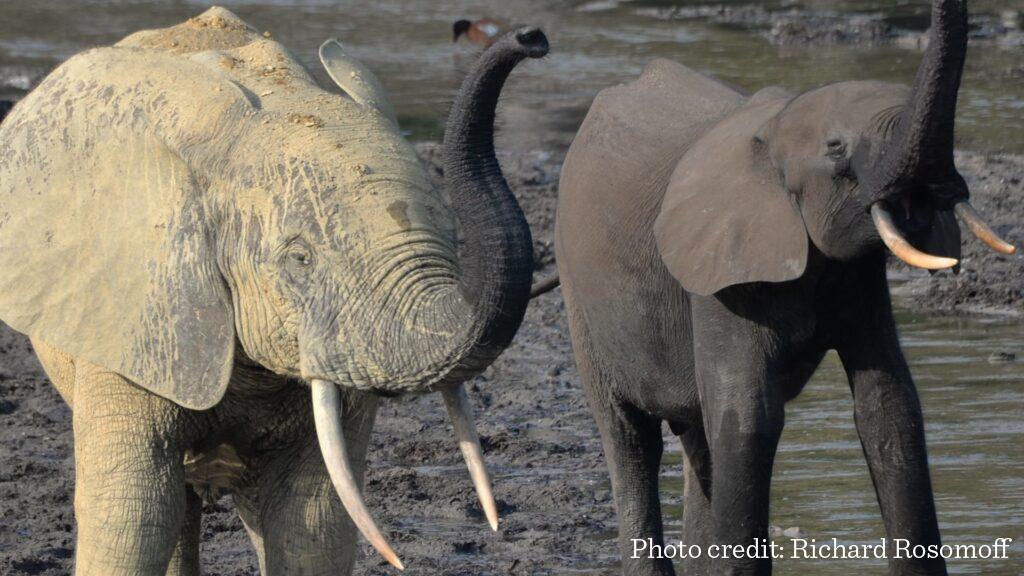
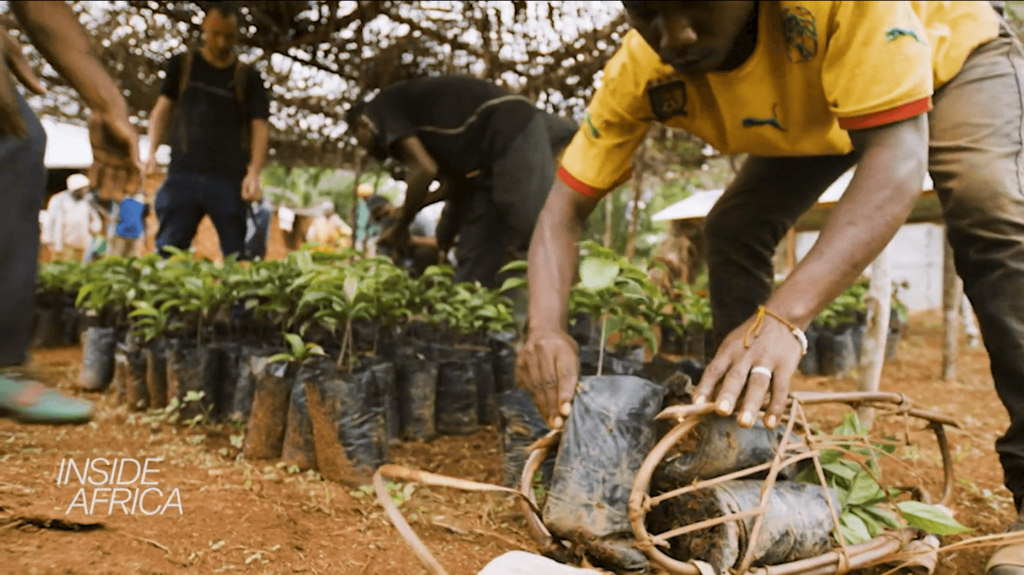
The 23-minute episode offers a rare, in-depth look at the Ebony Project’s work in Cameroon’s Congo Basin rainforest, exploring efforts to better understand ebony tree ecology and help ensure the species’ long-term future. Along the way, it highlights a range of discoveries and innovations — from the development of a community-based agroforestry model that supports both reforestation and local livelihoods to the role of forest elephants in seed dispersal.
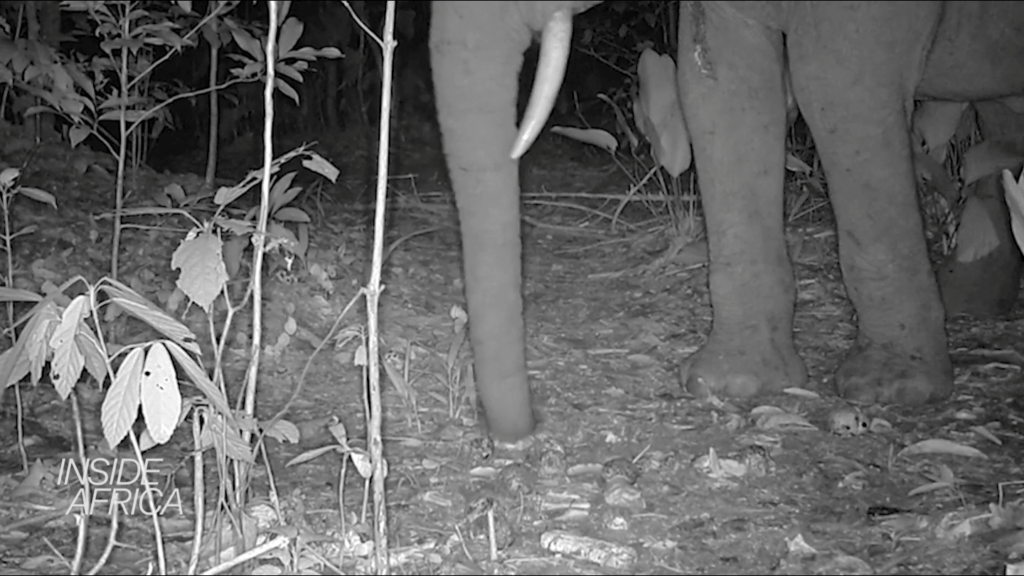
The feature also underscores the broader significance of the Congo Basin, home to the world’s second-largest tropical rainforest, and the intricate relationships between the people, wildlife and plant life that depend on it. Ebony’s unique physical properties have long made it a valued tonewood for musical instruments, but the episode reveals a deeper story about sustainability, stewardship and shared responsibility.
You can watch the full episode below.
How the Ebony Project Began
The Ebony Project traces back to Taylor Guitars’ 2011 acquisition of the Crelicam ebony mill in Yaoundé, Cameroon. In the years that followed, Taylor’s team worked closely with local sawyers and communities to better understand ebony sourcing and ensure practices were both legal and ethical, while also rebuilding the mill to improve efficiency and reduce waste.
That work led to a bigger question: Could ebony be actively replanted to support future supply? At the time, surprisingly little was known about how ebony trees reproduce and grow in the wild.
To help answer those questions, Taylor partnered in 2016 with the Congo Basin Institute, founded by UCLA biologist Dr. Tom Smith, to support long-term scientific research on ebony ecology.
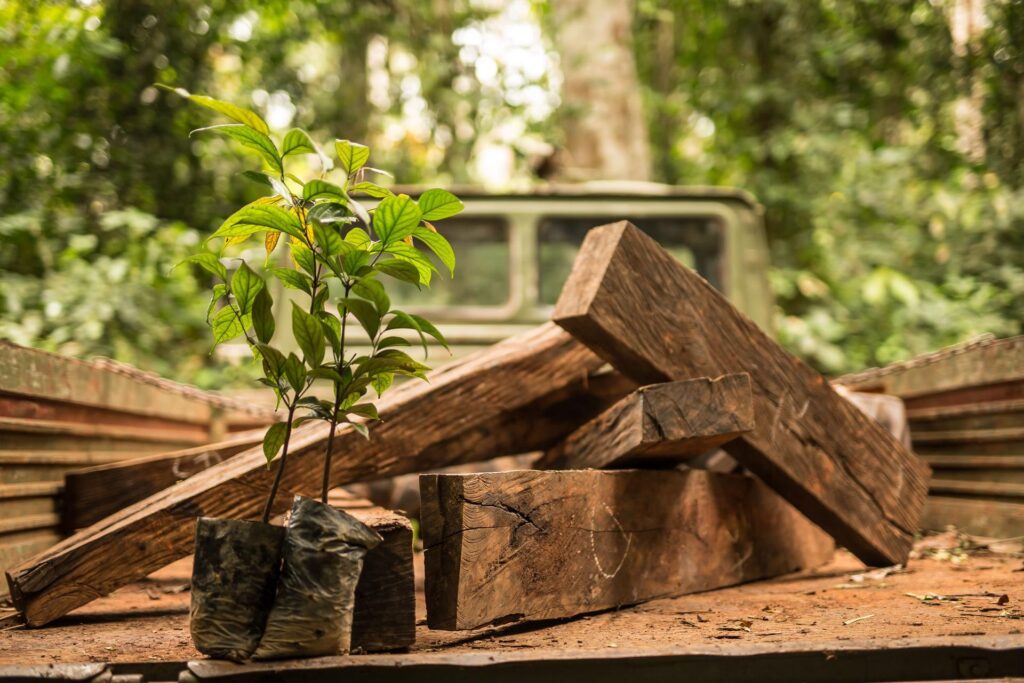
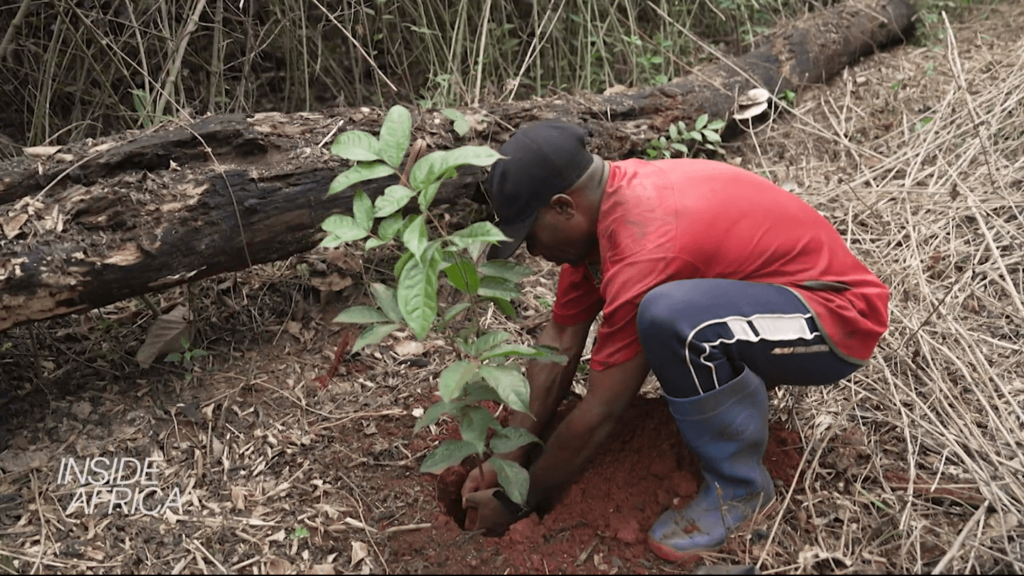
A decade later, that research has yielded meaningful results. Today, the project includes a scalable, community-based planting and agroforestry program spanning 18 forest communities and growing. More than 47,000 ebony trees have been planted along with more than 34,000 fruit trees — an approach designed not only to renew forest resources but also to support local food security. In addition to financial support by Bob Taylor and Taylor Guitars, in more recent years the project has been generously supported by the Global Environmental Facility (GEF) and the Franklinia Foundation.
Capturing the Story
To bring the story to life, CNN International sent a production crew to Cameroon, where they traveled with staff from Taylor Guitars and the Congo Basin Institute, visiting several small communities along the Somalomo corridor, a long dirt road that leads to an entrance of the Dja Faunal Reserve, a UNESCO World Heritage Site. While in the region, CNN spoke with community members participating in ebony planting efforts. The episode also features insights from a research associate at the Congo Basin Institute, along with agroforestry researchers, and explores how fruit tree cultivation complements the broader reforestation model for participating communities.
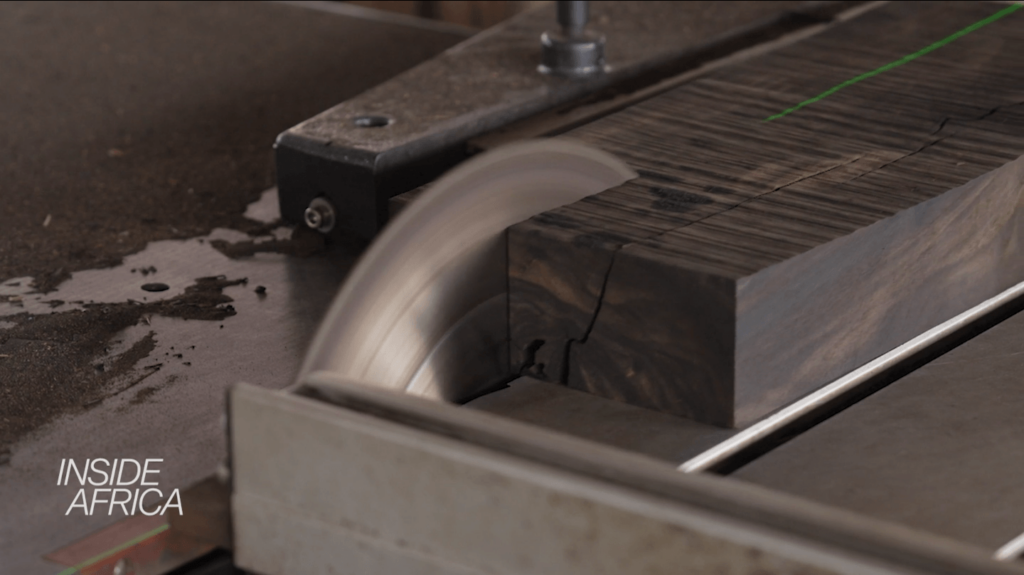
At the Crelicam mill in Yaoundé, viewers see ebony being processed and hear from operations director Matthew LeBreton, while a second crew traveled to Taylor’s headquarters in El Cajon, California, where co-founder Bob Taylor demonstrates how ebony is used in guitar making.

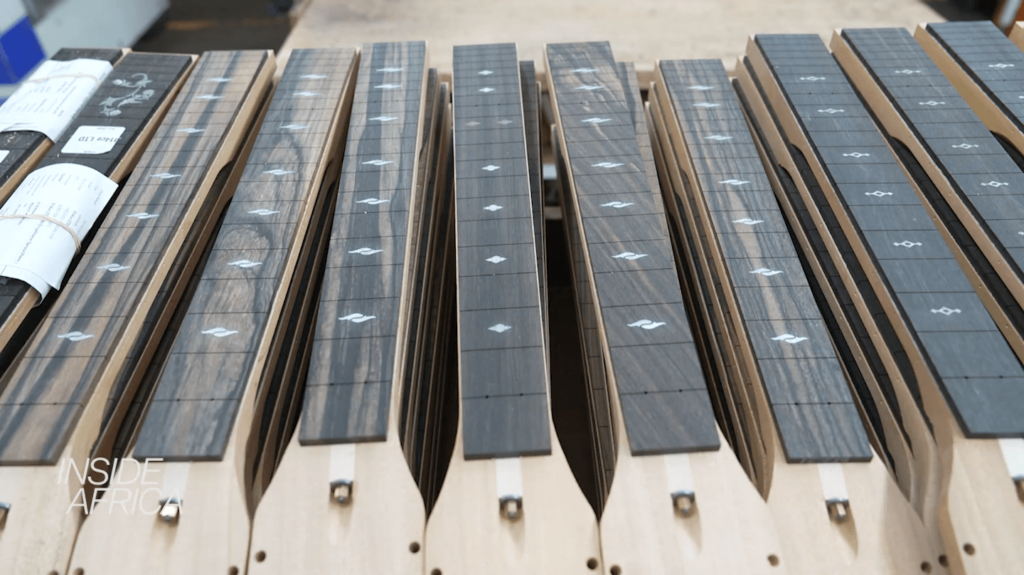
In the episode, Bob also reflects on Taylor’s decision to embrace variegated ebony — wood that had historically been rejected by the guitar industry for lacking a uniform black appearance. By using the full range of ebony’s natural color variation, Taylor helped reduce waste and encourage a broader shift in industry standards.
“The first step in sustainability is to not waste the material,” Bob says in the episode.
For more than 25 years, Inside Africa has spotlighted innovators and changemakers shaping the continent’s future. This feature on the Ebony Project brings global attention to a collaborative effort that connects science, community and craftsmanship — demonstrating how responsible sourcing and long-term thinking can help sustain both forests and the people who depend on them.
To learn more about the Ebony Project, you can read the 2025 annual progress report here.